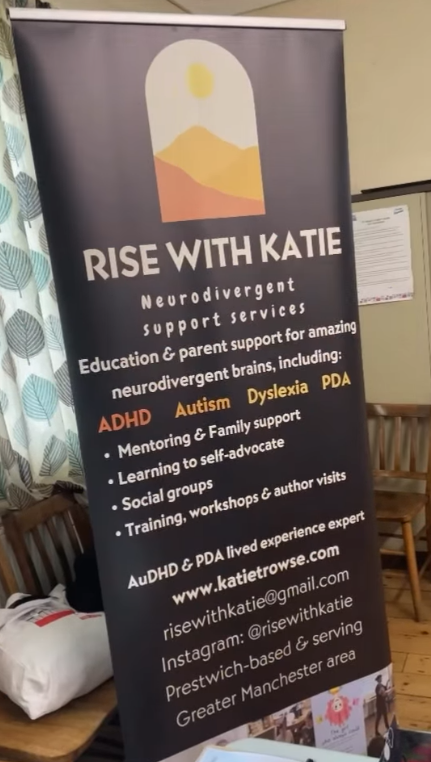
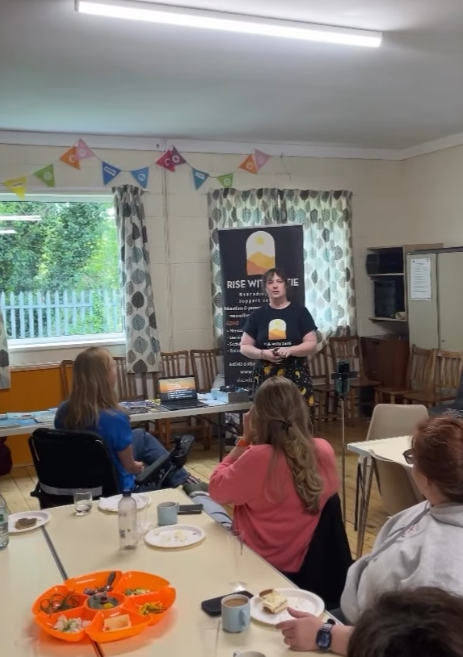
A few weeks ago I had the pleasure of speaking at an event hosted by The Send Social Stockport, a brilliant community-focused group creating inclusive spaces for families, young people, and professionals connected to neurodiversity and additional needs.
Their work centres around bringing people together in a supportive, social environment where lived experience, understanding, and connection are at the heart of everything they do.
It was clear from the moment I arrived that this was exactly that kind of space.
I was invited along to speak about PDA (Pathological Demand Avoidance), alongside wider conversations around neurodiversity and supporting children in ways that truly understand what is driving behaviours.
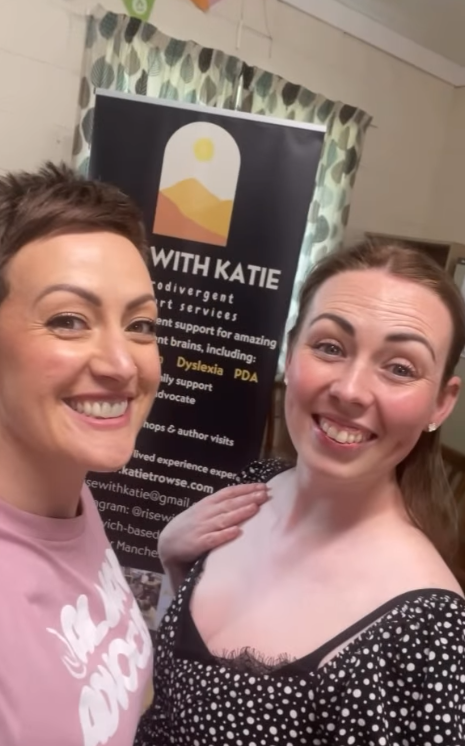
Rethinking PDA through a different lens
For me, PDA is never just about what we see on the surface. It’s about anxiety, autonomy, and nervous system responses that are often misunderstood.
When we shift the lens from “non-compliance” to communication, everything changes.
We begin to see behaviour not as something to manage, but something to understand.
That was a key focus of the talk, helping families and professionals explore what might be happening underneath the behaviour, and how we can respond in ways that reduce distress rather than escalate it.
Spaces where people can exhale
A big part of my work through Rise with Katie is creating environments where neurodivergent children, families, and professionals can simply exhale.
Places where there is no pressure to mask or perform. Where people are met with understanding rather than judgement. And where learning feels accessible, flexible, and human.
The Send Social Stockport was the perfect collaborator for this!
Why this work matters in practice
My background in education and my own lived experience has given me years of experience working alongside neurodivergent children and their families, and one thing has always remained consistent: there is no single approach that works for everyone.
Real support comes from flexibility, relationship-building, and adapting environments so children can thrive as they are, not as we expect them to be.
That’s what I aim to support through my training and resources: practical, real-world understanding that helps both families and schools feel more confident and connected in how they support neurodivergent children.
My book: a story of difference and self-acceptance
I also shared a little about my book, The Girl Who Always Could, a story about embracing strengths, understanding differences, and learning to value who you are without trying to fit into spaces that don’t suit you.
It reflects so much of what I believe: that difference is not something to fix, but something to understand, support, and celebrate.
What I took away from the day
What stood out most was the sense of community in the room. Families, professionals, and individuals coming together with a shared desire to better understand neurodiversity and support the young people in their lives.
There was space for honest conversation, reflection, and curiosity and that’s where meaningful change starts.
I left feeling grateful to have been part of it, and reminded again of why this work matters so deeply.